How did Davis County become Davis County?
From the Shoshone homeland to Utah’s third-largest county: 15 cities, 9 high schools, and the people who built them.
What’s new in Davis County history this week?
We post an old photo and you guess the place. The answer and the full story drop on Thursday.
Throwback Thursday: a then-and-now look at a Davis County landmark, with the real story behind it.
What Davis County newspapers reported this week, decades ago.
How did Davis County grow?
The Shoshone, Paiute and Ute peoples lived along the Wasatch Front for centuries, drawn by the creeks flowing from the mountains to the Great Salt Lake. Jedediah Smith passed through in 1826, and John C. Frémont’s expedition, with Kit Carson, mapped the region in the 1840s.
Two months after the first pioneer companies reached the Salt Lake Valley, Perrigrine Sessions wintered his herds at what became Bountiful, Utah’s second settlement. Hector Haight reached Farmington the same season.
Davis County was created in 1850 and named for Captain Daniel C. Davis of the Mormon Battalion. Farmington became the county seat, a role it holds today.
The Utah Central line tied the farm towns to Salt Lake and Ogden and spawned Woods Cross, named for the rail crossing on Daniel Wood’s farm. Simon Bamberger’s railroad brought Lagoon to Farmington in 1896.
Davis High opened in Kaysville in 1914. Bountiful (1951), Clearfield (1960), Viewmont (1964), Layton (1966), Woods Cross (1977), Northridge (1992), Syracuse (2007) and Farmington (2018) followed as the county grew. Find your school
Ground broke for Hill Air Force Base in January 1940, and within a decade orchards and onion fields gave way to one of Utah’s fastest-growing places. The WWII naval depot at Clearfield became the Freeport Center.
Roughly 380,000 people now call Davis County home across 15 cities, each with its own story.
Which city’s history do you want to explore?
Which high school did you go to?
Every class has a story. Find your school, then help us tell your year.
What are the latest Davis County history stories?
- Throwback Thursday: The Yellow Buses That Lasted Ten Days (Davis County, 1926)
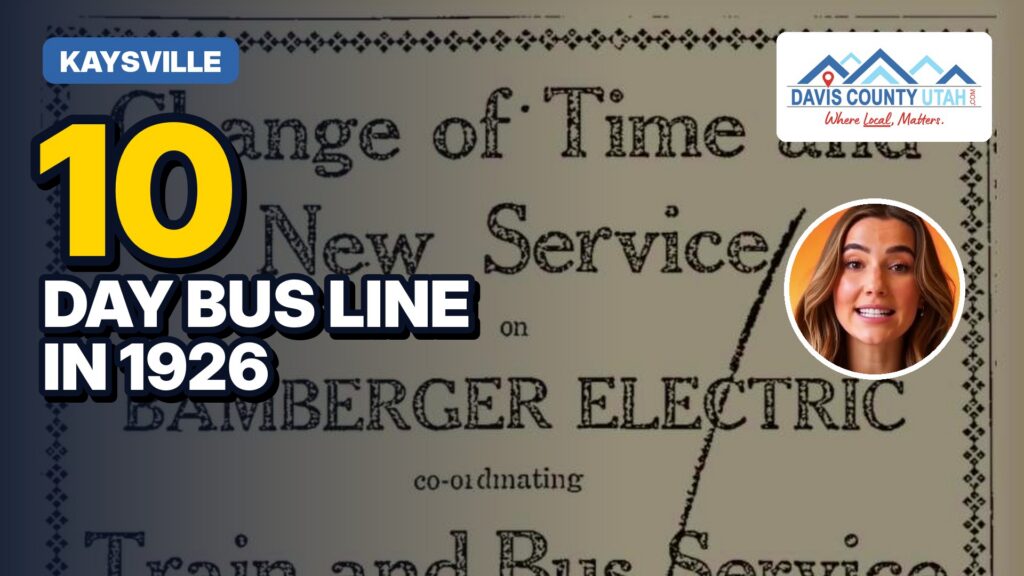 One hundred years ago this week, the Bamberger railroad promised a new Salt Lake–Ogden bus line through Davis County. It opened with a party in Kaysville, and it lasted about ten days.
- Throwback Thursday: The Week They Took Up Centerville’s Streetcar Track (Centerville, 1926)
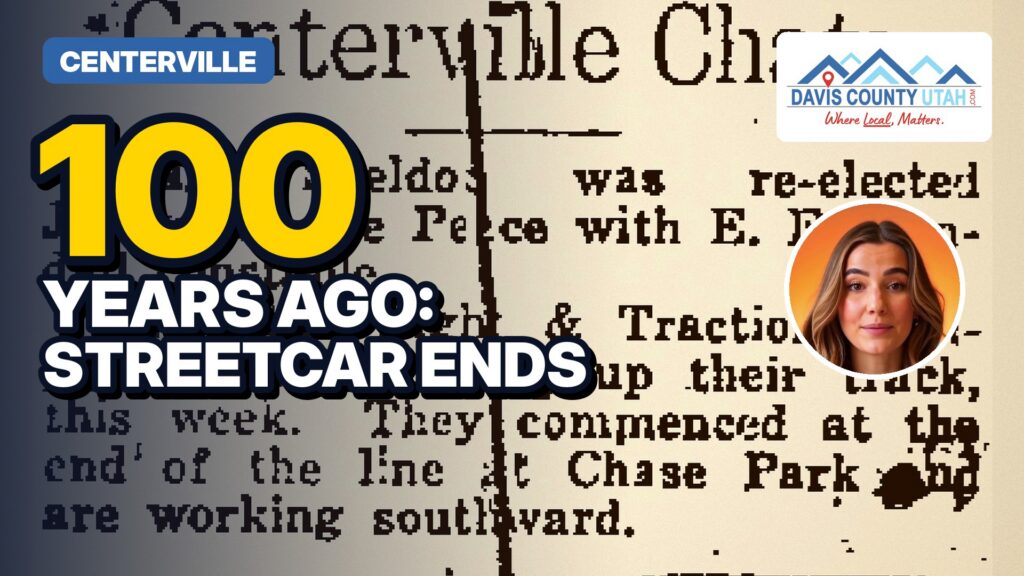 One hundred years ago this week, the Davis County Clipper noted in two short sentences that crews had started pulling up the streetcar track at Centerville.
- Throwback Thursday: Splitting the Bill for a Road Over the Kaysville Dam (Kaysville, 1926)
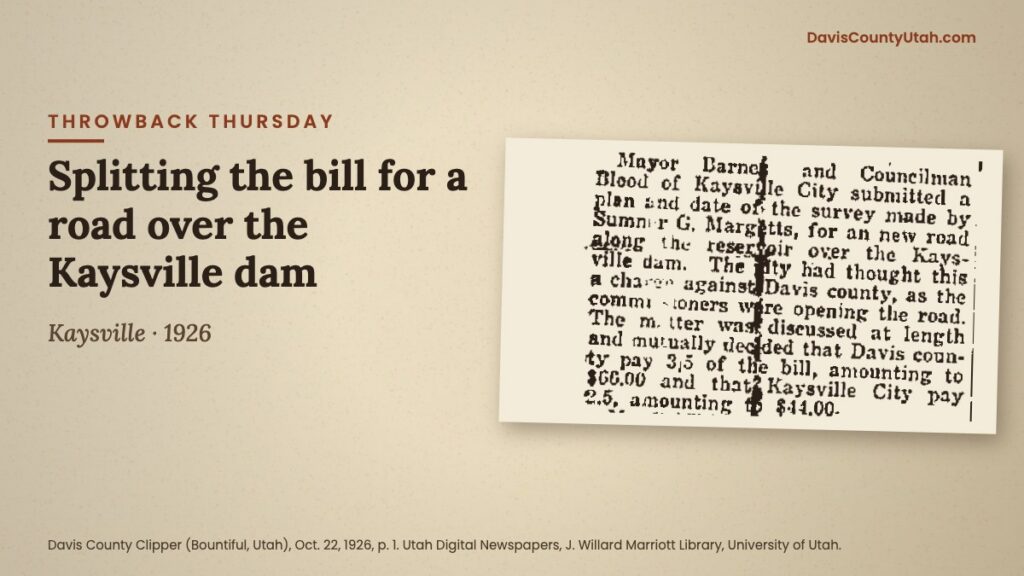 In October 1926, Kaysville and Davis County split the bill for a new road over the Kaysville dam. Here’s what else the county commission sorted out that day, from cattle trails to a railroad spur.
- Throwback Thursday: When North Salt Lake Was Bought an Acre at a Time (North Salt Lake, 1926)
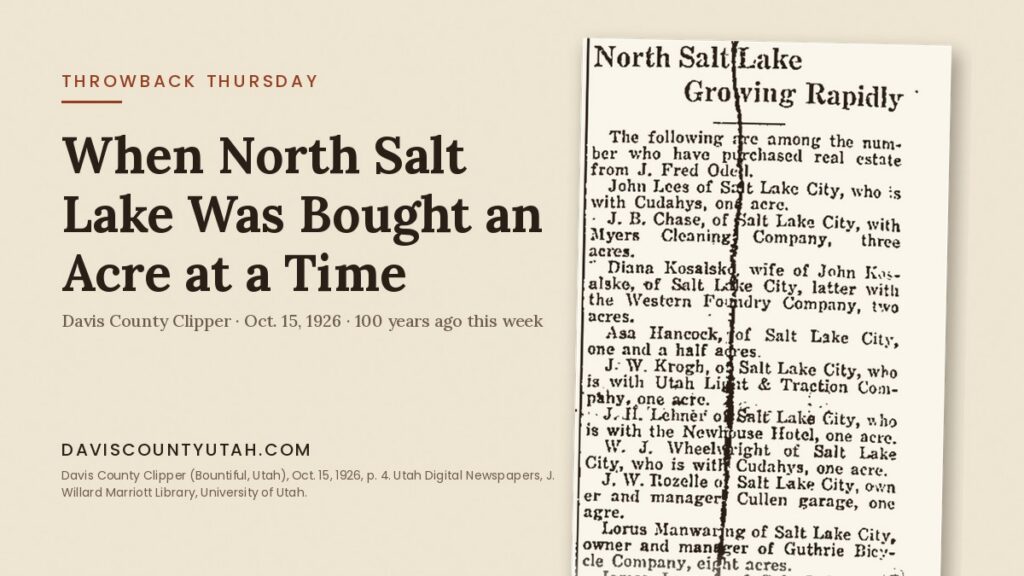 One hundred years ago this week, the Davis County Clipper ran a short list headlined “North Salt Lake Growing Rapidly.” Read closely, it shows a community being born.
- What’s Next for Ron’s Service Station, Centerville’s Main Street Landmark?
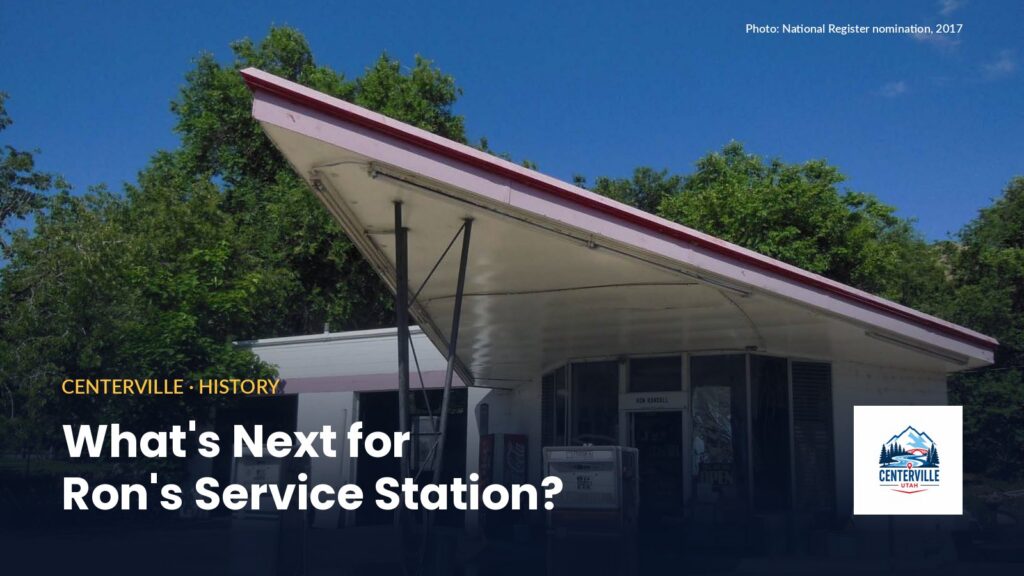 Ron’s Service Station on Centerville’s Main Street is on the National Register of Historic Places. Here’s what that does, and doesn’t, mean for its future.
- Lakeview Hospital at 50: How Bountiful’s Hillside Hospital Got Its Start
 Lakeview Hospital in Bountiful was dedicated Sept. 18, 1976. Here is how it came to be, how it got its name, and how it has grown in 50 years.
Where can you see Davis County history in person?
How do I get Davis County history every week?
Get Davis County stories, history included, in the free Insider newsletter.
Get the InsiderWhere does this history come from?
What sources does DCU use?
Public archives first: Davis County history, city records, the Utah Digital Newspapers archive and local museums. Each story names its sources.
Can I correct something?
Yes. Tell us what is wrong and how you know, and we will check it and update the page.
Will my school memory be public?
Only if you say so. Memories are reviewed first, and your name shows only if you choose. Birthdays and contact details are never published.
Do you publish whole yearbooks?
No. We use yearbooks as research sources and tell the story in our own words.